
Sizing & How-To
The Ultimate Shoe Width Guide: Width-Inclusive Sizing
AUG. 25, 2026
Quick Answer: Comfort Without Compromise
Finding shoes that fit comfortably shouldn't mean squeezing your feet into tight side walls or settling for generic sizing. A proper fit depends as much on foot width and internal volume as it does on shoe length. Wearing shoes that are too narrow can lead to painful bunions, pinched toes, and nerve irritation, while shoes that are too wide cause slippage and instability. Fortunately, inclusive footwear brands have perfected wide and narrow sizing without sacrificing style. Explore top width-inclusive collections from Ros Hommerson, Propet, and SoftWalk in-store and online at Shoe Carnival.
Why Width Sizing Is Essential for Foot Health
Standard shoe sizing focuses almost entirely on length, but human feet come in a vast variety of shapes. When you wear a shoe that doesn't match your foot's natural width, your toes are forced together, restricting healthy circulation and altering your natural walking stride.
Choosing specialized, width-inclusive footwear ensures your toes have room to splay naturally while keeping your arch supported and your heel properly anchored. Investing in dedicated Narrow, Wide, or Extra-Wide sizing protects your joints and ensures all-day comfort for work, travel, and daily routines.
Decoding Shoe Width Letters
-
Slim / Narrow (A, 2A, N) - Slender forefoot & narrow heel cup
-
Medium / Standard (B / M) - Standard industry width profile
-
Wide (D / W) - Expanded forefoot volume & roomier arch
-
Extra Wide (2E / 4E / WW) - Maximum width allowance for swelling/orthotics
Top Width-Inclusive Brands at Shoe Carnival
Discover three iconic brands leading the way in inclusive sizing and superior comfort engineering:
1. Elegant Precision: Ros Hommerson
If you need narrow, wide, or extra-wide sizing in polished, sophisticated silhouettes, Ros Hommerson is a premier choice.
- Why They Excel in Width Inclusion: Ros Hommerson specializes in crafting stylish heels, boots, dress flats, and sandals in an extraordinary range of sizes—frequently spanning Narrow (N), Medium (M), Wide (W), and Extra Wide (WW). Built with premium leathers, padded footbeds, and secure heel counters, Ros Hommerson proves you never have to choose between elegance and a custom-feeling fit.
2. The Orthopedic & Active Specialist: Propet
For maximum versatility, therapeutic support, and hard-to-find widths, Propet delivers outstanding performance across walking shoes, boots, and casual sneakers.
- Why They Excel in Width Inclusion: Propet is renowned for offering expansive width offerings up to Double Extra Wide (4E/5E). Designed with removable footbeds to accommodate custom orthotics, adjustable hook-and-loop straps, and shock-absorbing midsoles, Propet footwear is engineered specifically for active individuals seeking foot health solutions and room to move.
3. Premium Casual Comfort: SoftWalk
For everyday casual wear, supportive sandals, and work-ready clogs that feel tailored to your feet, explore SoftWalk.
- Why They Excel in Width Inclusion: SoftWalk weaves width inclusivity directly into its core design philosophy, crafting casual loafers, mules, and boots across Narrow through Extra Wide options. Featuring their signature patented footbed technology and ultra-soft lining materials, SoftWalk shoes cradle your feet to eliminate hot spots and friction points.
Actionable Diagnostic: The "Instep & Splay" Width Check
Unsure if you need a specialized width? Perform this simple 3-step physical fit check:
-
The Side Wall Pinch Test: Put on your shoes, stand upright, and press your thumb along the outer leather edge near your pinky toe.
-
The Lacing Eyestay Alignment: Look at the row of eyelets where your laces tighten over your instep.
-
The Heel-Lift Check: Walk briskly for ten steps down a hallway.
The Verdict: If your pinky toe bulges visibly over the midsole edge or if the lacing eyestays pull completely wide apart (leaving a huge gap over your instep), you need a Wide (W) or Extra Wide (WW) style. Conversely, if the lacing edges touch each other completely and your heel lifts continuously out of the shoe, step down into a Narrow (N) size for proper stability.
Shoe Width & Inclusive Sizing FAQs
What is the difference between Wide (W) and Extra Wide (WW/2E)? A standard Wide (W or D for women) shoe adds roughly an extra 1/4 inch of girth and forefoot volume compared to a Medium shoe. Extra Wide (WW or 2E/4E) adds even more volume across the instep, ball of the foot, and toe box, making it ideal for high insteps, severe foot swelling, or thick medical orthotics.
Can I just order a size larger in length to get more width? Sizing up in length to gain width is not recommended. Buying a shoe that is too long places the arch support in the wrong position relative to your foot, causes heel slipping, and increases your risk of tripping. Always choose your true length in a dedicated Wide or Narrow width.
Are Ros Hommerson, Propet, and SoftWalk shoes suitable for custom orthotics? Yes! Many styles from Propet, SoftWalk, and Ros Hommerson feature removable footbeds designed specifically to accommodate custom prescription orthotics or over-the-counter arch supports without making the shoe feel crowded.
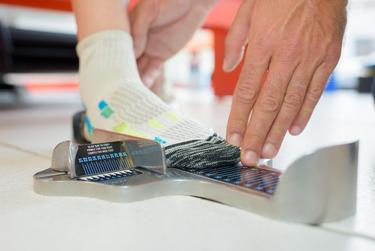
How do I measure my foot width accurately at home? Trace your bare foot onto a piece of paper while standing upright. Use a tape measure to measure the widest part of your foot trace across the ball of your foot. Compare that measurement against a standardized brand width chart to identify whether you require Narrow, Medium, Wide, or Extra Wide sizing.